Crypto Taxes in Spain in 2026: What You'll Declare Next Spring
Whatever you do with your crypto this autumn gets declared in spring 2027, so September is a good time to learn the rules: what's taxed (sales, swaps, payments), what isn't (just holding), the 2026 savings-base brackets (19-30%), and when Form 721 applies. General content — doesn't replace advice from a tax professional.

Table of contents
It's September. Whatever you do with your crypto right now — selling, staking, getting paid in it — doesn't get taxed today; it gets taxed in the next tax return campaign, in spring 2027. Which makes September, while you're already getting your head around the rest of the year, a good time to understand the rules before you act, not after.
This is general, educational content. Your actual tax situation depends on your specifics — net worth, region, type of transaction. For your particular case, it's worth confirming the details with a Spanish tax professional (gestoría).
The base rule: only realised transactions are taxed
Just like with stocks or funds, simply holding crypto in your wallet without selling it triggers no tax. What creates a taxable gain or loss is:
- Selling crypto for euros (or another currency).
- Swapping one cryptocurrency for another — this counts too, even without touching euros.
- Paying for goods or services with crypto.
The logic is simple even if the bookkeeping isn't: sale value minus purchase value, minus fees, using the FIFO method when you bought the same coin at different times.
What about staking, lending, or an airdrop
Crypto income splits into two different tax buckets in Spain:
- Gains from selling or swapping: go into the savings tax base (the same one as stock gains).
- Staking and lending rewards: also the savings base, treated as investment income.
- Mining, airdrops, or payments received in crypto (say, getting paid for freelance work in crypto): go into the general tax base, alongside your salary, with its own rate scale.
The 2026 rates (savings tax base)
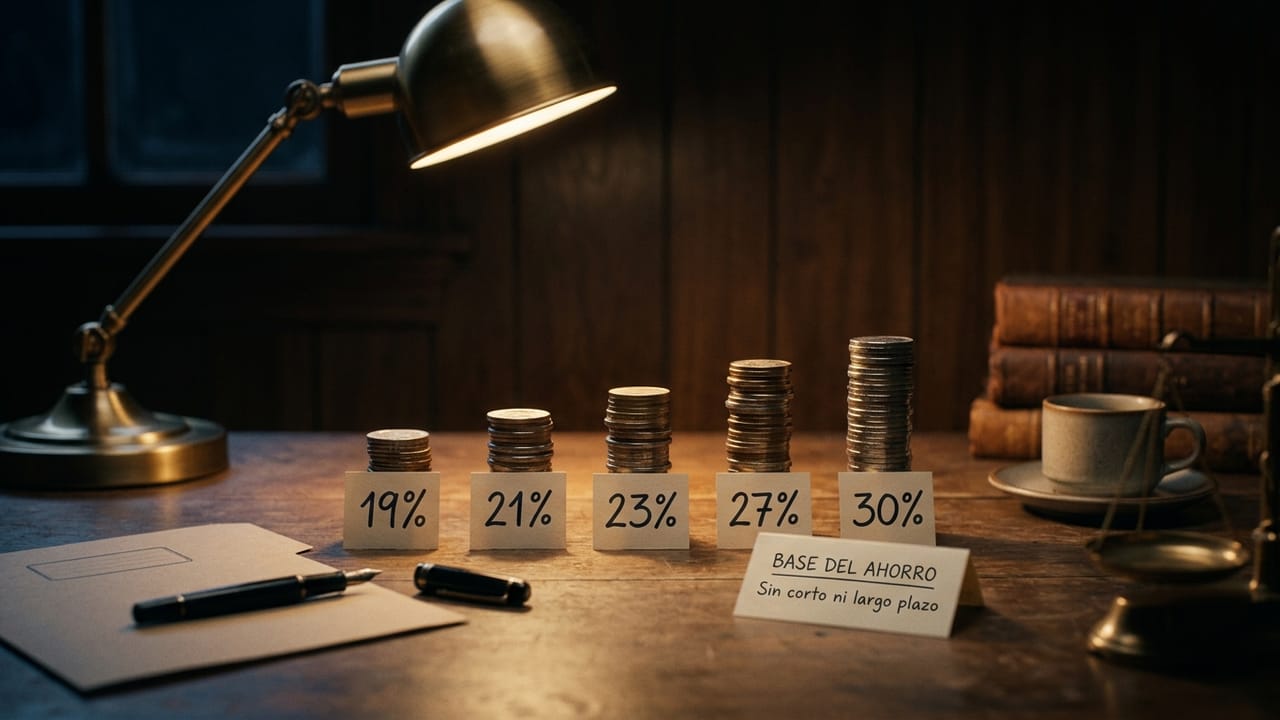
This is the part that changes every year and always needs a live check — these are the brackets in force for the 2026 filing (2025 tax year):
| Gain | Rate |
|---|---|
| Up to €6,000 | 19% |
| €6,000 to €50,000 | 21% |
| €50,000 to €200,000 | 23% |
| €200,000 to €300,000 | 27% |
| Above €300,000 | 30% |
It's a progressive bracket system, not a flat rate: if you make €40,000, you don't pay 21% on all of it, only on the slice that falls in that bracket. The top bracket (€300,000+) rose from 28% to 30% compared to last year — worth knowing if you're planning to realise large gains before year-end.
Form 721: if your crypto is held outside Spain
If, as of December 31st, you hold more than €50,000 in crypto custodied on platforms based outside Spain, filing Form 721 (Modelo 721) is mandatory in the following campaign. It's an informational filing — it doesn't itself mean paying more tax — but missing the deadline does carry penalties. Worth checking now whether your exchanges count as being inside or outside Spain, before the year's activity piles up further.
What you can do now, without waiting until April
- Log each transaction as it happens (date, euro value, fee) — reconstructing it in March is far harder.
- Mentally separate sales/swaps from staking or airdrop income: they land in different tax buckets.
- If you're planning a large sale before year-end, keep in mind which bracket that gain would fall into — not to "optimise" anything risky, just to avoid a surprise.
And if crypto is only one slice of your net worth, it's worth looking at it in context: here's how to review a portfolio's risk spread.
FinBoard helps with the visibility side: seeing your crypto activity alongside the rest of your finances, in one place, so filing season doesn't mean reconstructing the whole year from scratch.
Start free, no card required at finboard.me.